Source Steel Handtruck for Tools, Shopping, and Industrial Storage
Compare 30 Steel Handtruck models with capacities up to 650kg and wheel options for tools, shopping, and industrial storage. Buyers can evaluate customization, certifications, and lead times from Jiangsu and Qingdao suppliers.
Key considerations
Products List



Comprehensive Sourcing Guide
Strategic Sourcing Guide for Steel Hand Trucks
Understanding Core Technical Specifications and Variants
When sourcing steel hand trucks, buyers must first navigate a complex landscape of technical specifications that define the utility and durability of the equipment. The primary material composition is consistently identified as steel, a choice that offers the necessary structural integrity for heavy-duty industrial and commercial applications. However, the specific grade of steel and the resulting load capacity vary significantly across different product lines. Observed data indicates that models such as the HT300A are designed with a capacity of 650KG, while other variants like the HT200 and HT250 suggest a tiered approach to load management. Buyers should verify the specific load rating for their intended use, as the market includes units rated for 300kg alongside those capable of handling significantly heavier payloads.
The physical dimensions and configuration of the hand truck are equally critical. The body size for certain models, such as the Ht1805, is specified as 1310550460mm, providing a baseline for storage and maneuverability in tight spaces. In contrast, other models like the PH2008 and PH150 may offer different form factors. The wheel configuration is a major differentiator; the market presents options with 2, 4, or 6 wheels. A 2-wheel design is typical for standard utility carts, whereas 4-wheel or 6-wheel configurations often enhance stability for heavy loads or uneven terrain. Furthermore, the wheel type itself varies between air-filled and solid options. Air wheels generally provide better shock absorption on rough surfaces, while solid wheels eliminate the risk of punctures, making them suitable for environments with debris or sharp objects.
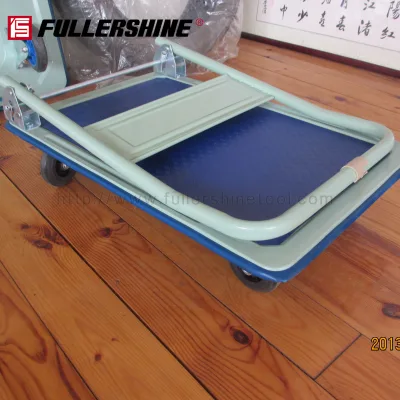
The folding mechanism is another essential technical attribute. Products are categorized into "Unfolding" and "Folding" styles. Folding models, such as those in the PH series, are designed for space efficiency when not in use, allowing them to be stored vertically or collapsed flat. Unfolding styles may refer to specific deployment mechanisms or fixed-frame designs that prioritize rigidity over compact storage. Buyers must align these mechanical features with their operational workflow. For instance, a warehouse with limited floor space will prioritize folding units, while a manufacturing line requiring constant, rapid deployment might favor a robust, fixed-frame design.
Compliance, Certification, and Standard Verification
Navigating the regulatory landscape is a non-negotiable aspect of B2B procurement for industrial equipment. The supplied data highlights several key certifications and standards that serve as markers of quality and safety compliance. Common certifications observed include CE, GS, and TUV, which are essential for products entering the European market. The CE mark indicates conformity with health, safety, and environmental protection standards for products sold within the European Economic Area. Similarly, the GS mark (Geprüfte Sicherheit) represents a German safety certification that is often a prerequisite for high-quality industrial goods. The TUV certification further validates that the product has undergone rigorous testing by a recognized third-party organization.
In addition to safety certifications, ISO certification is noted for certain product lines, suggesting adherence to international management system standards for quality and consistency. The HS code 871680 is a critical identifier for customs classification, placing these items under the category of other trailers and parts thereof, which includes hand trucks. This classification is vital for calculating import duties and ensuring accurate documentation. Buyers should verify that the supplier can provide valid, current certificates for the specific model being purchased, as certification status can vary between product lines even within the same factory.
Product standards are also explicitly linked to model numbers in some cases. For example, the PH2008 and PH150 models are associated with their respective model numbers as standards, while the HT1830 follows a similar pattern. This suggests that the model number itself may encode specific compliance or design standards. However, buyers must exercise caution and not assume that a model number automatically guarantees compliance with external regulatory bodies. The presence of a CE standard or ISO certification should be confirmed through official documentation provided by the supplier, rather than inferred solely from the product listing.
Cost Drivers and Pricing Dynamics
The pricing structure for steel hand trucks is influenced by a combination of material costs, manufacturing complexity, and order volume. The observed price range in the market spans from $9.5 to $120 USD, a wide disparity that reflects the diversity in product capabilities. Lower-priced units, likely falling near the $9.5 mark, may correspond to basic models with minimal features, such as simple steel frames, solid wheels, and standard folding mechanisms. Conversely, the higher end of the spectrum, approaching $120, likely encompasses heavy-duty industrial models with advanced features like high load capacities (e.g., 650KG), air wheels, and comprehensive safety certifications.
Minimum Order Quantity (MOQ) is a significant factor affecting the unit cost. The market data indicates an MOQ range of 4 to 1000 units. Small orders, perhaps as low as 4 units, allow for flexibility but may carry a higher per-unit cost due to the fixed costs of production and logistics. Larger orders, reaching up to 1000 units, typically benefit from economies of scale, potentially lowering the price per unit. Buyers must balance their inventory needs against their budget constraints. For instance, a company requiring a single unit for occasional use might accept a higher price point, whereas a large logistics firm purchasing 500 units would likely negotiate a lower rate based on volume.
Lead time is another critical cost driver. The data specifies a lead time of 320 days for certain production runs, which is exceptionally long and suggests either a custom manufacturing process, a backlog of orders, or a specific production cycle for high-volume or specialized items. This extended timeline impacts the total cost of ownership by tying up capital and potentially delaying project timelines. Buyers should clarify whether this lead time applies to all models or only to custom configurations. Standard models with shorter lead times might be available for immediate shipment, while custom orders requiring specific colors, packaging, or modifications will incur the longer delay.
Typical Applications and Usage Scenarios
Steel hand trucks are versatile tools designed for a wide array of applications, ranging from industrial manufacturing to retail and storage. The observed usage categories include Tools, Shopping, Industrial, and Storage. In an industrial setting, these units are essential for moving raw materials, finished goods, and heavy machinery components. The high load capacity of models like the HT300A makes them suitable for factory floors where heavy loads are common. The durability of the steel construction ensures they can withstand the rigors of a busy manufacturing environment.
For retail and shopping applications, the focus shifts to maneuverability and ease of use. Folding models are particularly valuable here, as they can be easily stored in backrooms or behind counters when not in use. The 2-wheel or 4-wheel configurations provide stability for customers or staff moving merchandise. In storage facilities, the ability to stack and organize goods efficiently is paramount. Hand trucks with a 650KG capacity can facilitate the movement of palletized goods or bulk items, reducing the physical strain on workers and increasing operational efficiency.
The "Tools" usage category suggests that these hand trucks are also employed in maintenance and repair contexts. In such scenarios, the portability and robustness of the equipment are crucial. A hand truck that can be folded and stored compactly allows maintenance teams to keep them accessible without cluttering the workspace. The specific model selection should be guided by the weight and type of tools being transported. For example, a model with air wheels might be preferred for outdoor maintenance tasks where uneven ground is encountered, while a solid-wheel model might be better for indoor workshops with smooth floors.
Supplier Evaluation and Production Capabilities
Evaluating suppliers requires a deep dive into their production capabilities, geographic location, and service offerings. The data indicates that products originate from various locations in China, including Jiangsu, Jiaonan Qingdao, and general regions labeled as Qingdao, China. These regions are known for their manufacturing clusters, particularly in the metalworking and machinery sectors. Buyers should verify the specific factory location to assess the logistics chain and potential shipping costs. A supplier based in Qingdao may offer advantages in terms of port access for international shipping, while a Jiangsu-based manufacturer might have different logistical considerations.
The customization options available are a key differentiator among suppliers. The data confirms that customization is available, allowing buyers to tailor products to their specific needs. This could include modifications to the color, such as the blue option observed, or changes to the packaging. Packaging standards vary, with options including plastic bags, cartons, or a combination of both. Some suppliers offer "One Piece Per Carton" or "One Piece Per Plastic Bag" packaging, while others use generic "in Carton" or "in Bag" descriptions. Buyers should specify their packaging requirements clearly to ensure the product arrives in good condition and meets their internal handling protocols.
After-sales service is another critical factor in supplier selection. The data mentions a "ONE YEAR" warranty for certain models and a general commitment to "Can Provide After Sale Service." This indicates that suppliers are willing to support their products post-purchase, which is essential for maintaining operational continuity. Buyers should inquire about the specific terms of the warranty, including what is covered and the process for filing claims. Additionally, the availability of spare parts and the responsiveness of the support team should be evaluated. A supplier with a robust after-sales network can significantly reduce downtime and maintenance costs over the life of the product.
Quality Control and Long-Term Procurement Considerations
Ensuring consistent quality is paramount when sourcing steel hand trucks. The surface handling process, specifically "Paint," is a standard feature observed in the product data. This coating serves to protect the steel from corrosion and wear, extending the lifespan of the equipment. Buyers should verify the quality of the paint finish, including its thickness and adhesion, to ensure it can withstand the intended environment. For industrial applications, a high-quality paint job is essential to prevent rust and maintain the structural integrity of the frame.
Long-term procurement considerations involve looking beyond the initial purchase price to the total cost of ownership. This includes factors such as maintenance requirements, replacement part availability, and the durability of the product. The warranty period, typically one year, provides a baseline for expected performance, but buyers should consider the long-term reliability of the steel construction and wheel mechanisms. Models with solid wheels may require less maintenance than those with air wheels, which can be prone to punctures and require regular inflation checks.
The standardization of product models, such as the HT series and PH series, suggests a level of consistency in manufacturing. However, buyers should remain vigilant about variations in quality between different batches or suppliers. Establishing a relationship with a supplier that offers consistent quality control processes is essential. This includes verifying that the supplier adheres to the stated standards and certifications. Regular audits or quality inspections may be necessary to ensure that the products continue to meet the required specifications over time.
| Feature Category | Observed Options | Strategic Consideration |
|---|---|---|
| Load Capacity | 300kg, 650KG | Match capacity to maximum expected load; avoid under-specification. |
| Wheel Configuration | 2, 4, or 6 Wheels | 2-wheel for agility; 4-6 wheel for stability on heavy loads. |
| Wheel Type | Air / Solid | Air for shock absorption; Solid for puncture resistance. |
| Folding Style | Folding / Unfolding | Folding for storage efficiency; Unfolding for rigidity. |
| Certification | CE, GS, TUV, ISO | Verify validity for target market; essential for compliance. |
| Origin | Jiangsu, Qingdao, China | Assess logistics costs and lead times based on location. |
| Warranty | 1 Year | Confirm terms and coverage; check for extended options. |
In conclusion, sourcing steel hand trucks requires a meticulous approach that balances technical specifications, compliance requirements, and cost factors. By carefully evaluating the observed data and verifying specific details with suppliers, buyers can secure equipment that meets their operational needs while ensuring long-term reliability and safety. The diversity of models available, from basic utility carts to heavy-duty industrial units, offers solutions for a wide range of applications, provided that the selection process is grounded in thorough due diligence and clear communication with the supplier.
FAQs
What certifications do steel hand trucks typically have?
Steel hand trucks commonly carry CE, GS, TUV, and ISO certifications. These marks indicate compliance with safety and quality standards for European and international markets, ensuring the equipment meets rigorous testing requirements for industrial use.
Which wheel configurations are available for steel hand trucks?
Available configurations include 2, 4, or 6 wheels depending on the model. Options also vary between air-filled and solid wheels, allowing buyers to select based on terrain needs, with solid wheels preventing punctures in debris-heavy environments.
Can buyers customize the color and packaging of these units?
Yes, customization is available for color and packaging specifications. Buyers can request specific colors like blue and choose between plastic bag or carton packaging, with some models offering one piece per carton for enhanced protection during shipping.
What is the lead time for ordering steel hand trucks?
The lead time for certain production runs can reach 320 days. This extended duration often applies to custom manufacturing processes or high-volume orders, so buyers should verify timelines for standard models versus customized configurations before placing orders.
How does the load capacity vary across different models?
Load capacities range from 300kg to 650kg depending on the specific model. Models like the HT300A are designed for heavy industrial use with 650kg capacity, while other variants like the HT200 series may offer lower ratings for lighter tasks.
What warranty periods are offered for steel hand trucks?
Many models come with a one-year warranty period. Suppliers also commit to providing after-sales service, ensuring support for maintenance and repairs, which helps maintain operational continuity for industrial and commercial users relying on this equipment.